cultivation
Background
Cultivation was a project which invited people to cultivate food in sustainable, sometimes quirky ways. Cultivation of relationships was a by-product of the project as participants shared their experiences and skills. The project evolved in 2011 through the artist cooking with Reading's refugee women. She suggested they grow vegetables together but they had no land.
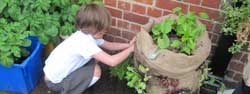
Quaker Elizabeth Cave was consulted concerning the sustainable cultivation techniques she teaches in drought affected areas in Rwanda and Kenya. As a result, the women began to grow food in vertical hessian sacks at Reading's Quaker Meeting House as well as in their own homes. The sacks use minimal soil, water and manpower and can be grown on any hard surface such as cement.
Links were formed with charities, community groups and schools, and we acquired an allotment to test out alternative cultivation methods and to cultivate a sense of community. At the end of the growing season, participants gathered to cook the food they had grown. In Redlands School, the children cooked and served a meal for their dinner ladies. In Newtown School, the children made salads and invited teachers and family to taste their produce. At Reading Refugees Support Group, the refugee women cooked up a feast with their vegetables.
Collaborators in the project:
Reading Refugee Family Support (RRFS), Reading
Reading International Solidarity Centre (RISC) and their roof garden specialists
Food for Families, Reading
Reading Quaker Meeting
St John's Primary School, Reading
Newtown Primary School, Reading
Redlands Primary School, Reading
Holt Secondary Girls' School, Winnersh
Quaker Elizabeth Cave was consulted concerning the sustainable cultivation techniques she teaches in drought affected areas in Rwanda and Kenya. As a result, the women began to grow food in vertical hessian sacks at Reading's Quaker Meeting House as well as in their own homes. The sacks use minimal soil, water and manpower and can be grown on any hard surface such as cement.
Links were formed with charities, community groups and schools, and we acquired an allotment to test out alternative cultivation methods and to cultivate a sense of community. At the end of the growing season, participants gathered to cook the food they had grown. In Redlands School, the children cooked and served a meal for their dinner ladies. In Newtown School, the children made salads and invited teachers and family to taste their produce. At Reading Refugees Support Group, the refugee women cooked up a feast with their vegetables.
Collaborators in the project:
Reading Refugee Family Support (RRFS), Reading
Reading International Solidarity Centre (RISC) and their roof garden specialists
Food for Families, Reading
Reading Quaker Meeting
St John's Primary School, Reading
Newtown Primary School, Reading
Redlands Primary School, Reading
Holt Secondary Girls' School, Winnersh